
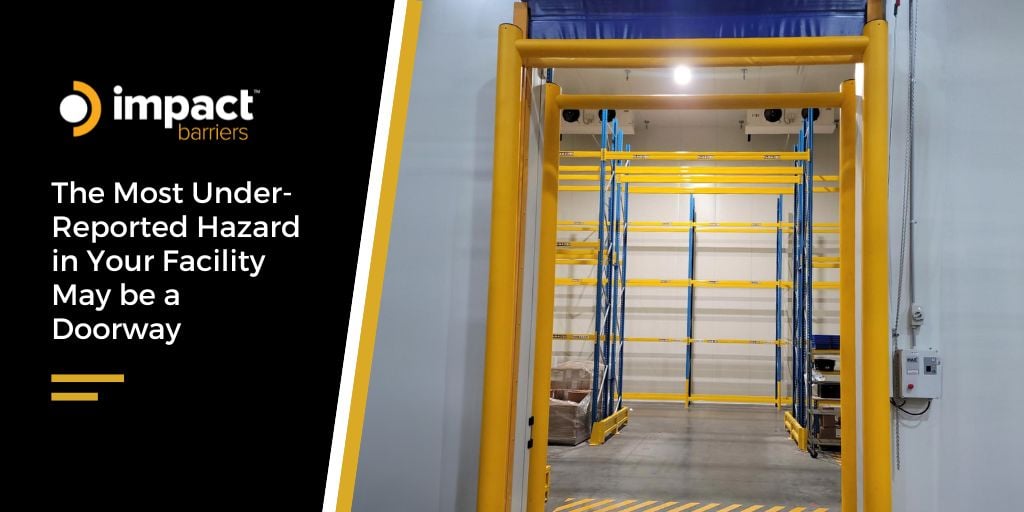
Ask a warehouse manager where the highest-risk zones in their facility are and you’ll hear about racking aisles, loading docks, pedestrian crossings. Doorways rarely make the list.
That’s the problem.
Overhead doors, loading bay entrances and internal access points take more hits than almost any other fixed structure in a busy facility. Forklifts clip frames on the way through. Pallet jacks nudge jambs during tight manoeuvres. Delivery vehicles misjudge clearance. It happens dozens of times a week in active operations.
And almost none of it gets reported.
Why Doorway Impacts Go Unreported
Low-speed collisions with doorframes are treated differently from collisions with racking, bollards or other workers. There’s no visible injury. The forklift keeps moving. The door still opens. So, the operator keeps moving too.
Over time, this becomes cultural. Doorway impacts are normalised. They’re considered part of the operational landscape rather than a hazard to be documented and controlled. In some facilities, you can trace years of this behaviour in the damage to the door frame: paint scraped off in layers, metal bent and rebent, welds cracking at stress points that have been hit the same way fifty times.
The reporting gap creates a second problem beyond the physical damage. If impacts aren’t recorded, they don’t appear in safety data. They don’t trigger reviews. They don’t inform risk assessments. The hazard becomes invisible on paper while it continues to accumulate in the structure of the building.
From a compliance standpoint, that invisibility is dangerous. Under the Work Health and Safety Act 2011, PCBUs are required to manage foreseeable risks. An impact pattern that exists but isn’t documented doesn’t mean the risk has been managed. It means the risk has been ignored.
What Cumulative Damage Actually Looks Like
The first few impacts rarely cause obvious problems. A scuff on the frame. A slight bend in the jamb. Easy to ignore, easy to paint over.
The tenth impact starts to misalign the door. It doesn’t close flush anymore. There’s a draught. In a cool room or controlled environment, that draught is a temperature variance, and a temperature variance is a compliance issue, a product quality issue and an energy cost issue all at once.
The thirtieth impact cracks the concrete around the anchor points. Now you have a structural repair, not a maintenance job. The door needs to come off. The floor needs to be patched. The operation stops.
Automated doors have an additional failure mode. The mechanical components, tracks, sensors, and motor mounts are calibrated to operate within tolerance. Repeated frame distortion pushes them out of alignment. Automated systems start jamming, reversing unexpectedly, or failing to trigger. What began as a clip on the way through has become a maintenance callout, then a replacement.
None of this appears in the incident register. It appears on the maintenance budget, and nobody connects the two.
The Cost Nobody Adds Up
Door repairs are typically expensed as routine maintenance. Each job looks small in isolation: a callout here, a panel replacement there. What rarely gets calculated is the aggregate cost across a facility over a year.
Add the direct costs together: repair callouts, replacement panels, concrete remediation, automated system recalibration. Then add the indirect costs: operational downtime while repairs are being completed, temperature losses in cold storage, production stoppages, emergency after-hours maintenance premiums.
For a facility running multiple overhead doors in a high-traffic environment, those numbers add up fast. In most cases, the annual cost of unprotected door damage significantly exceeds the cost of installing protection in the first place.
The maintenance budget absorbs it quietly. The safety budget never sees it. And so, the conversation about protection never happens.
Why the Fix Is Simpler Than the Problem
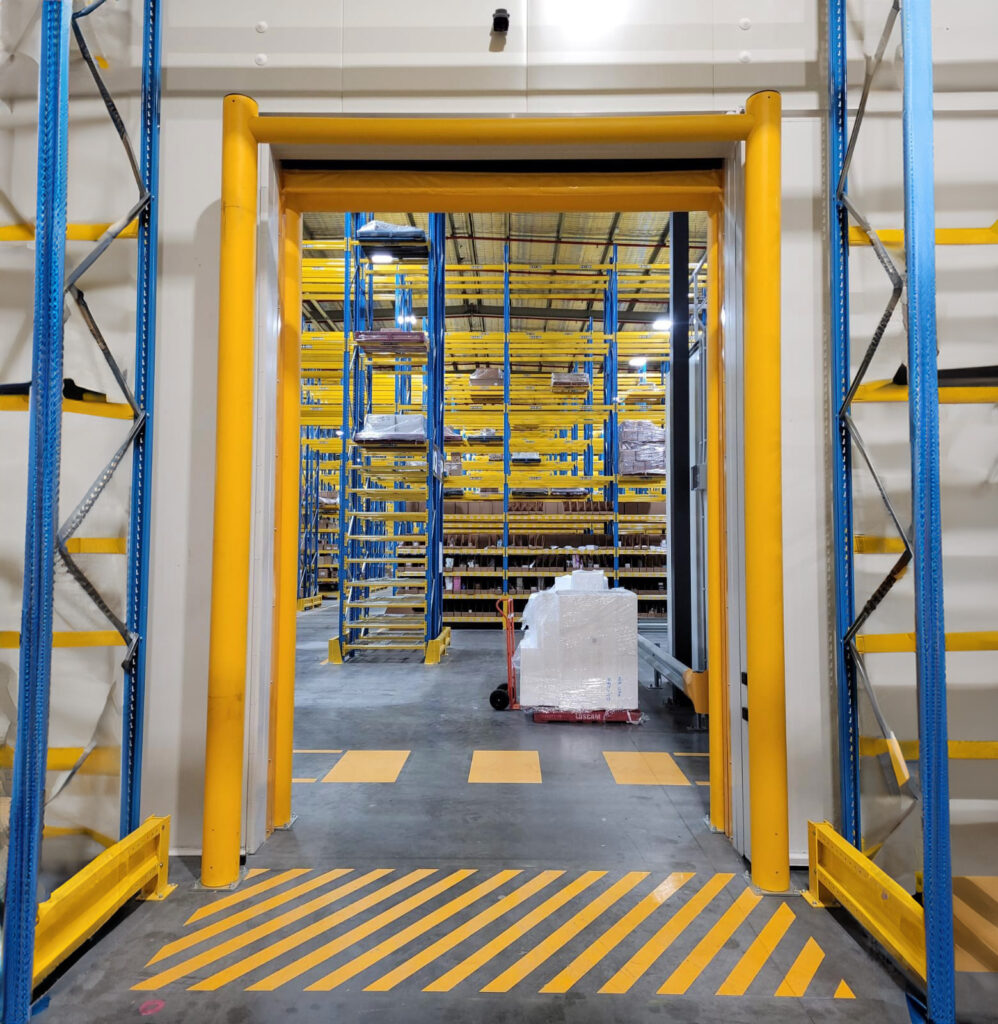
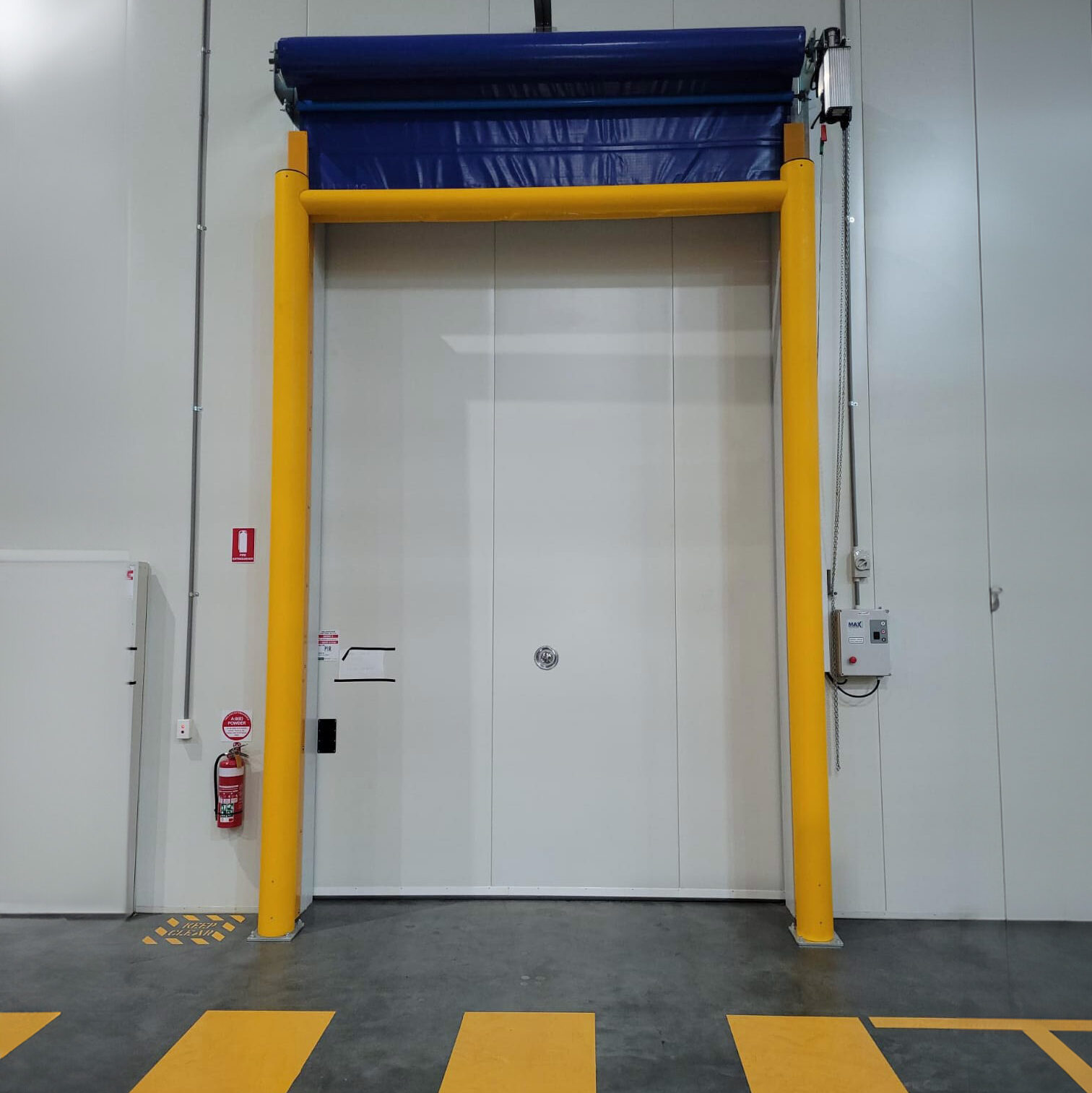
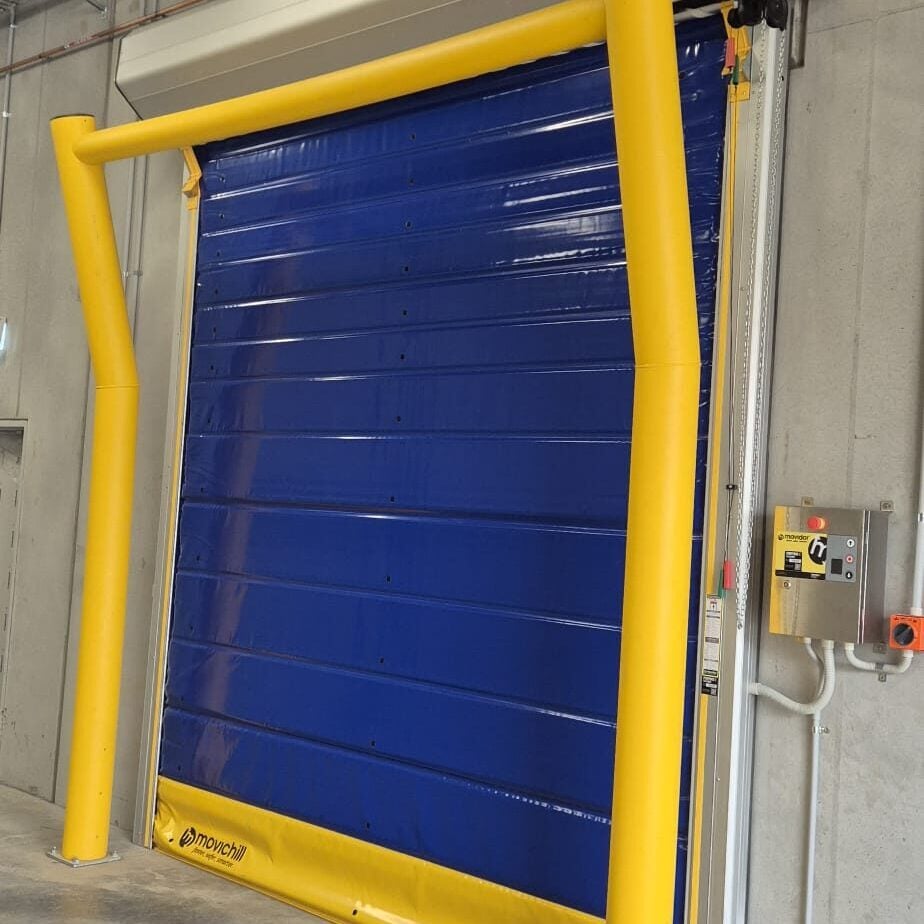
The Impact Overhead Door Protector is designed specifically for this problem. It’s an Australian Made, food-grade polymer barrier system that installs around overhead door frames and absorbs the low-to-mid speed impacts that accumulate in busy operational environments.
The key difference from steel protection is what happens at the moment of impact. Steel transfers force. It protects the door by taking the hit and passing the energy into the floor, the vehicle and the operator. The Impact polymer system absorbs and dissipates that energy, then returns to its original shape. The door frame is protected. The floor is protected. The operator feels less force. And the protector is ready for the next impact without needing replacement.
Installation is non-invasive. The system can be floor-mounted or wall-mounted without modifying the door structure. We supply and install services across Australia, and the modular design means individual sections can be replaced if needed without removing the entire system.
For cold storage and food manufacturing environments specifically, the food-grade polymer construction and -30-degree temperature rating make it one of the few overhead door protection options that’s genuinely suited to the conditions, rather than adapted from a product designed for a different application.
Bringing Doorways Back into the Risk Assessment
The starting point isn’t installing protection. It’s looking honestly at what’s happening at your doorways right now.
Walk your overhead doors and loading bay entrances. Look at the frames. Look at the floor around the anchor points. Look at the paint. If you can read a history of impacts in the condition of the structure, that history belongs in your risk register.
Pull the last 12 months of maintenance records and separate out anything door related. Add it up. That number is your baseline cost of inaction.
Talk to operators. Ask them directly whether they’ve had contact with door frames and whether they reported it. The answer will tell you more about the reporting culture than any incident register will.
Once you have that picture, the decision about protection becomes straightforward. The risk is documented, the cost is quantified and the control measure is available. At that point, not acting is the harder thing to justify.
What Good Protection Looks Like in Practice
Not all overhead door protection is the same. A few things to look for when specifying:
Coverage of the full door mechanism. Protection that covers only part of the frame leaves the rest exposed. The Impact system offers both straight and angled options to ensure the entire door mechanism is protected without sacrificing floor space.
Flex and restore properties. A protector that deforms permanently after impact needs replacing. One that returns to shape can absorb repeated collisions without losing effectiveness.
No concrete damage. The anchor system should distribute force without cracking the floor. This is particularly important in facilities where floor integrity is a safety or hygiene requirement.
Suitability for the environment. Cold storage, food manufacturing and outdoor loading environments have specific requirements. Confirm the product is rated for the conditions it will operate in.
Local supply and support. With manufacturing in Melrose Park and warehouse facilities in NSW and VIC, Impact can move quickly on supply and installation. That matters when you’re working to a project timeline or responding to a safety finding.
The Hazard That’s Been There the Whole Time
Doorways don’t make the hazard register because they don’t cause the kind of incidents that demand immediate attention. They cause the kind of damage that accumulates slowly, costs money quietly and eventually fails in a way that was entirely predictable.
The solution has been available for years. The question is whether the hazard has been visible enough to act on. For most facilities, the answer is that it hasn’t, not because it wasn’t there, but because nobody was looking.
Ready to protect your overhead doors?
Talk to the Impact Barriers team.
Request a quote | 1800 765 539 | sales@impactbarriers.com.au
View the Impact Overhead Door Protector: impactbarriers.com.au/overhead-door-protectors